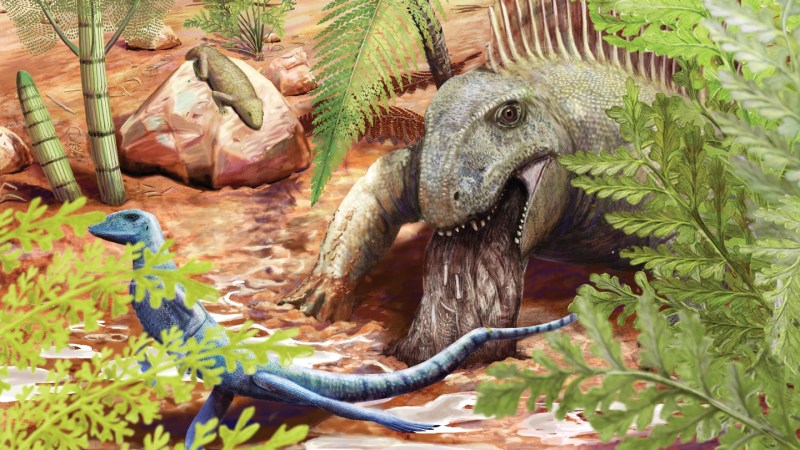
Fossilized vomit reveals 290-million-year-old predator’s diet

The regurgitated material from before the time of dinosaurs provides a rare window into the feeding habits of a prehistoric hunter.The regurgitated material from before the time of dinosaurs provides a rare window into the feeding habits of a prehistoric hunter.  

Read More

Source: Science News

Related Articles

Artemis II is returning humans to the moon with science riding shotgun

NASA’s Artemis II could be the first time human eyes set sight on the farside of the moon — and there are things human eyes can see that cameras can’t.NASA’s Artemis II could be the first time human eyes set sight on the farside of the moon — and there are things human eyes can see that cameras can’t.  

Read More

Source: Science News

NASA’s Artemis II could be the first time human eyes set sight on the farside of the moon — and there are things human eyes can see that cameras can’t.

These beetle larvae lure in bees by mimicking flowers

These parasitic beetle larvae lure in bees with complex floral aromas before hitching a ride back to their nests and eating their eggs.These parasitic beetle larvae lure in bees with complex floral aromas before hitching a ride back to their nests and eating their eggs.  

Read More

Source: Science News

These parasitic beetle larvae lure in bees with complex floral aromas before hitching a ride back to their nests and eating their eggs.

Babies brains’ can follow a beat as soon as they’re born

Brain scans and signals show babies can sort images and sense rhythm, offering new insight into how infant brains are wired from the start.Brain scans and signals show babies can sort images and sense rhythm, offering new insight into how infant brains are wired from the start.  

Read More

Source: Science News

Brain scans and signals show babies can sort images and sense rhythm, offering new insight into how infant brains are wired from the start.

AI helps archaeologists solve a Roman gaming mystery

Researchers used AI-driven virtual players to test more than 100 rule sets, matching gameplay to wear patterns on a Roman limestone board.Researchers used AI-driven virtual players to test more than 100 rule sets, matching gameplay to wear patterns on a Roman limestone board.  

Read More

Source: Science News

Researchers used AI-driven virtual players to test more than 100 rule sets, matching gameplay to wear patterns on a Roman limestone board.

Responses